Your nervous system does not live only in your head. Good thing neither does LENS.
why you might bere here
Trauma, chronic stress, and nervous system dysregulation do not stay neatly above the neck. They live in the body. In the tight shoulders that will not release, the gut that is constantly unsettled, the chronic pain that no one can fully explain, the fatigue that sleep does not fix, and the physical symptoms that have been investigated, treated, and yet somehow persist. The body keeps its own record, and sometimes it needs its own direct intervention to begin shifting what has been held for so long.
Body LENS applies the same Low Energy Neurofeedback System technology used in head LENS directly to areas of the body, allowing the peripheral nervous system to receive the same gentle dis-entrainment signals that help the brain release stuck patterns. By targeting specific sites along the body, Body LENS can address localized dysregulation, chronic pain presentations, somatic stress responses, and nervous system holding patterns that have not resolved through talk therapy, bodywork, or other approaches alone. It is a direct conversation with the nervous system in the language it actually speaks: signal, not story.
how therapy helps
At Providence, Body LENS is offered within a clinically guided framework. Before any treatment begins, your clinician will complete an initial assessment to understand your history, physical symptoms, and nervous system functioning, and to determine the most appropriate Body LENS protocol for your needs. Sessions are tailored to target the areas of your body that carry the most dysregulation, whether that is related to chronic pain, inflammation, injury, trauma-held tension, or autonomic imbalance that shows up somatically.
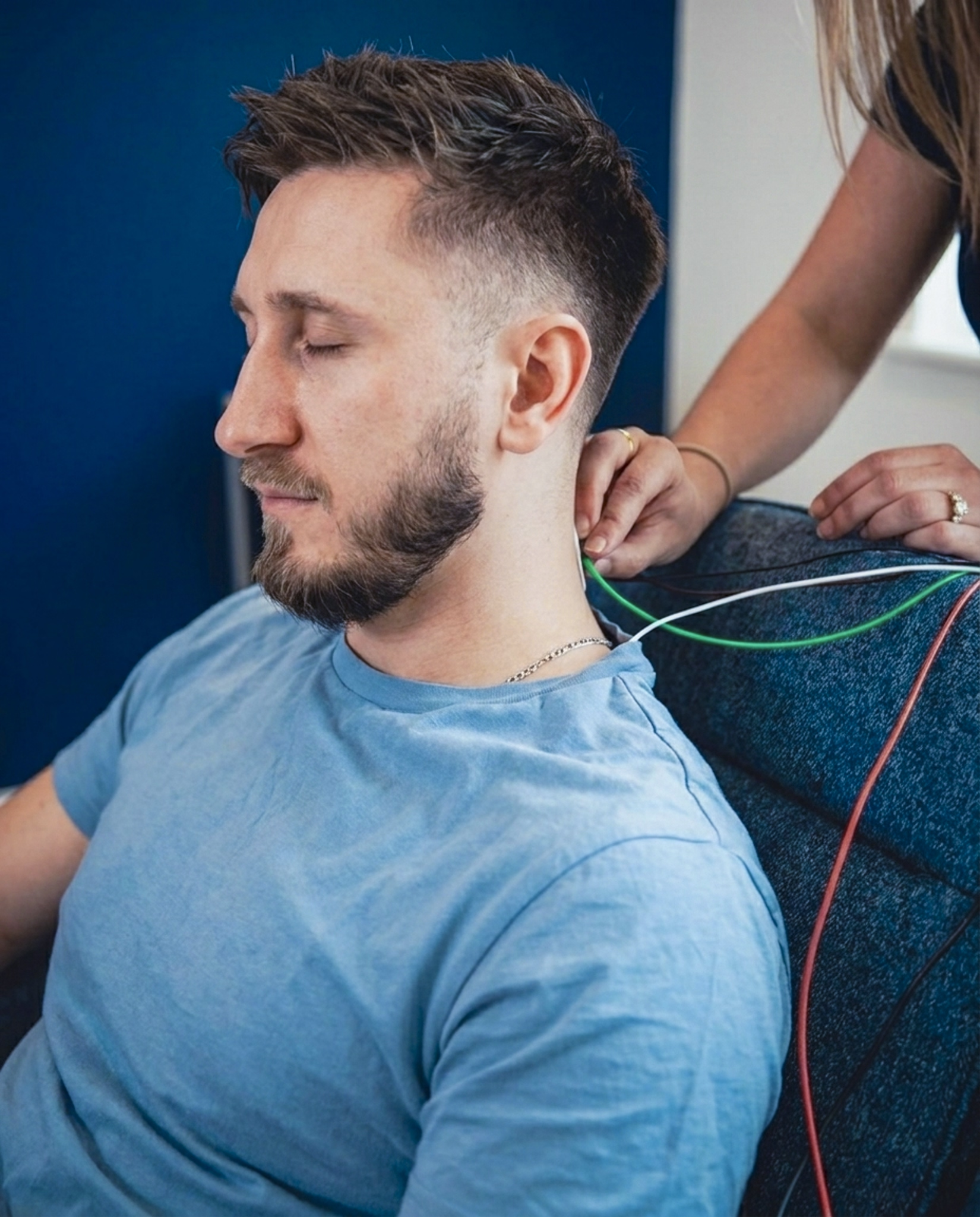
During a Body LENS session, sensors are placed on the skin at specific body sites rather than on the scalp. The LENS system reads the electrical activity present and returns extremely low-energy electromagnetic feedback signals to those areas, prompting the peripheral nervous system to release entrenched patterns and move toward greater balance. Sessions are quiet, passive, and comfortable. Many clients find them deeply settling. Body LENS can be offered alongside Head LENS as part of a comprehensive neurotherapy protocol, or as a focused somatic intervention in its own right, and integrates well with trauma-focused therapy and other somatic modalities.

A nervous system that has begun to release what it has been holding in the body

Reduced chronic pain, tension, or somatic discomfort

Greater ease and comfort in your own physical experience

Decreased inflammation and improved circulation over time

A body that feels less braced and more at home in itself

Improved capacity for rest, recovery, and physical regulation

Relief from symptoms that have not responded to other approaches

Deeper integration when used alongside trauma-focused therapy

A felt sense that healing does not have to start and stop at the neck
years in business
clients served
modalitie options
neurotherapy options
how therapy helps
At Providence, Body LENS is offered within a clinically guided framework. Before any treatment begins, your clinician will complete an initial assessment to understand your history, physical symptoms, and nervous system functioning, and to determine the most appropriate Body LENS protocol for your needs. Sessions are tailored to target the areas of your body that carry the most dysregulation, whether that is related to chronic pain, inflammation, injury, trauma-held tension, or autonomic imbalance that shows up somatically.
During a Body LENS session, sensors are placed on the skin at specific body sites rather than on the scalp. The LENS system reads the electrical activity present and returns extremely low-energy electromagnetic feedback signals to those areas, prompting the peripheral nervous system to release entrenched patterns and move toward greater balance. Sessions are quiet, passive, and comfortable. Many clients find them deeply settling. Body LENS can be offered alongside Head LENS as part of a comprehensive neurotherapy protocol, or as a focused somatic intervention in its own right, and integrates well with trauma-focused therapy and other somatic modalities.

If you have any questions for us prior to booking an appointment or being matched with a therapist, please fill out this contact form and our clinic concierge will get back to you during business hours (Monday- Friday 9:00am to 5:00pm PST).
We look forward to supporting you
604-332-5279
info@providencetherapybc.com
For Your Clarity
Body LENS tends to be particularly well-suited for individuals dealing with chronic pain, fibromyalgia, persistent physical tension, somatic symptoms related to trauma or anxiety, injury recovery, fatigue, and nervous system dysregulation that shows up primarily in the body. It is also a valuable complement for clients who are already doing Head LENS or trauma-focused therapy and want to address the somatic dimension of their experience more directly.

All new Body LENS clients begin with an initial assessment ($225), which allows your clinician to understand your history and physical presentation and design an appropriate treatment protocol. From there, Brief Body LENS sessions are up to 30 minutes and cost $125. Short Body LENS sessions run 30 to 40 minutes and cost $187. Full Body LENS sessions are 50 minutes and cost $210. Packages are available for those completing a longer course of treatment.
The electromagnetic signals used in Body LENS are extremely low in energy and most clients do not feel them during the session itself. You will be comfortably positioned with sensors placed on specific areas of your body, and the session is generally quiet and restful. Some clients notice a sense of warmth, ease, or release in the areas being treated. Others notice shifts in the hours or days following a session, including reduced pain, improved sleep, or a greater sense of physical ease.
Yes, and combining Body LENS with Head LENS or trauma-focused therapy is often where clients see the most comprehensive results. Head LENS addresses central nervous system regulation while Body LENS works with the peripheral nervous system and somatic presentation, so together they offer a fuller picture of nervous system care. Your clinician will help you design a protocol that makes sense for your specific goals and circumstances.
Both Head LENS and Body LENS use the same Low Energy Neurofeedback System technology, which delivers extremely low-energy electromagnetic signals to the nervous system to help release stuck patterns and promote self-regulation. The difference is in where the sensors are placed. Head LENS targets the brain and central nervous system via the scalp. Body LENS places sensors directly on areas of the body to engage the peripheral nervous system and address somatic presentations such as chronic pain, physical tension, and body-held stress responses. Both can be used together or independently, depending on your needs.
This varies depending on the individual and the nature of what you are working on. Some clients notice shifts relatively quickly, while others benefit from a longer course of treatment for lasting change. Your clinician will monitor your progress and adjust the protocol over time. Packages are available and can make a longer program more accessible.