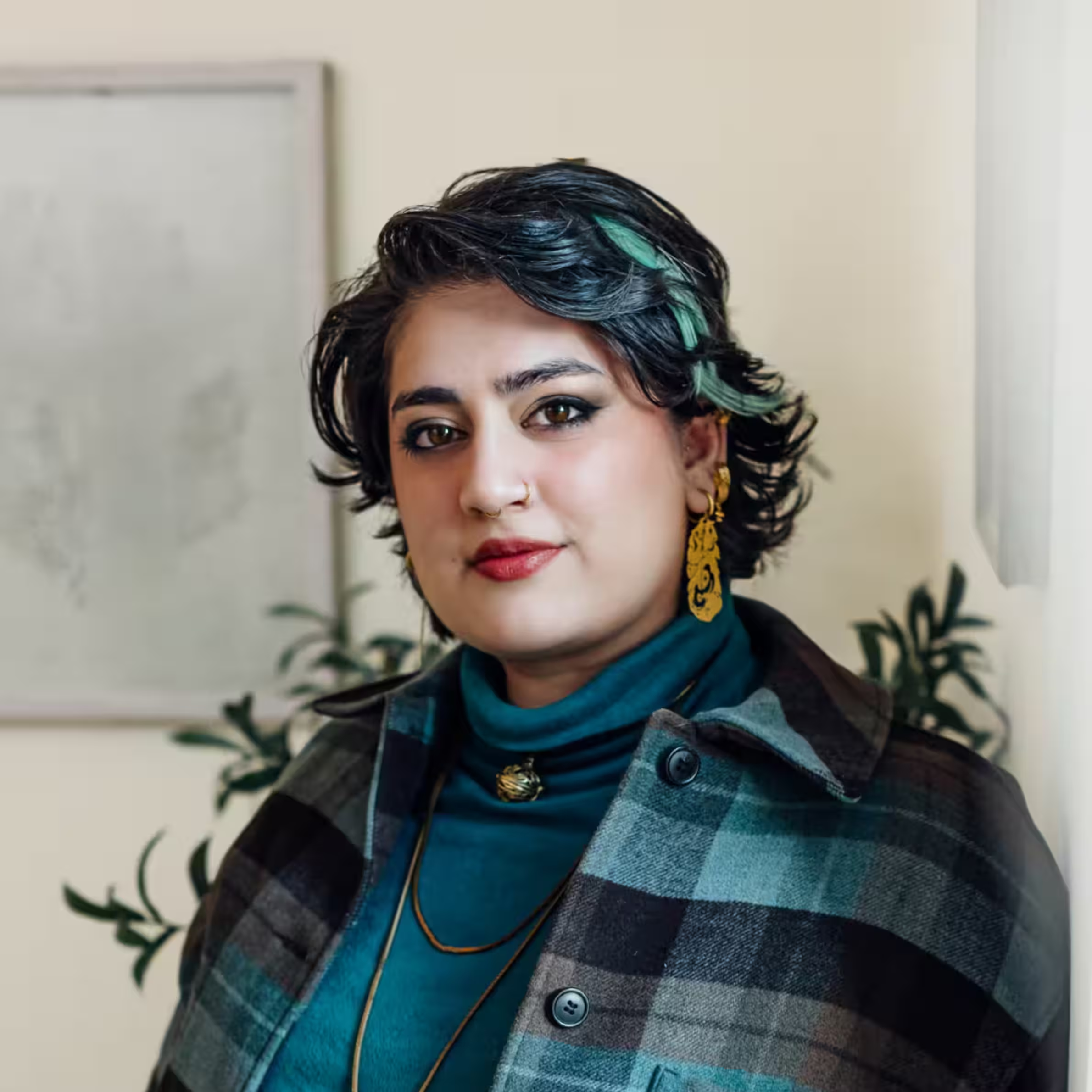
Women's Mental Health Support

You've spent a long time holding everything together. This is a place to put some of it down.

why you might be here

You're carrying more than your share, and you've been doing it quietly for a long time.

Women are socialized to manage, to nurture, to absorb, and to keep going. The result is often a particular kind of exhaustion that is hard to name because it doesn't look like falling apart. It looks like functioning. It looks like showing up for everyone else while quietly losing touch with yourself. It looks like anxiety that hums in the background of a life that, from the outside, appears completely fine. It looks like numbness, or perfectionism, or the persistent sense that you are too much and never enough at the same time.

‍

You might be navigating a specific concern, including postpartum mental health, hormonal shifts across the lifespan, trauma, relationship pain, body image, the pressure of motherhood, the complexity of women's identity in a world that holds a lot of contradictory expectations for who you're supposed to be. Or you might simply know that something is off and you want a space where you don't have to explain yourself before you can be helped. Either way, you belong here.

how therapy helps

Therapy that understands the landscape women actually navigate.

At Providence, our therapists bring a gender-informed, trauma-aware lens to every aspect of women's mental health work. That means we understand the ways that systemic and relational experiences, including experiences of sexism, sexual trauma, reproductive loss, caregiving labour, and the ongoing negotiation of identity across roles, shape mental health in ways that are specific to women's lives. We don't treat these as background context. We treat them as central to the work.

‍We draw on experiential, somatic, and attachment-focused approaches that are particularly well suited to the ways women tend to hold stress, trauma, and relational pain in the body. Whether you are working through something specific or simply trying to find your way back to yourself, our approach is warm, relational, and genuinely attentive to the full complexity of what you bring into the room. We also support women through the distinct mental health dimensions of reproductive experiences, hormonal transitions, and the particular pressures of womanhood at every life stage, from early adulthood through perimenopause and beyond.

Why choose Providence Therapy

7

years in business

3,500+

clients served

34 +

modalitie options

10 +

neurotherapy options

illustration blue line-work flowers

"She was never quite ready. But she was brave, and the universe conspired to help her." —Atticus

the outcome

What Sets Us Apart

  • Unconventional by Choice, Exceptional by Design

    Our clinicians combine specialized expertise with intentionally unconventional, innovative methods to craft care that is deeply personal and never one-size-fits-all.
  • We don't just talk about it

    Our experiential, integrative treatment models address trauma and a wide range of concerns at their root.
  • Trusted by Over 3,500 Clients and Counting

    Our track record reflects thousands of individuals, couples, and families who have found meaningful healing with our team.
  • Rooted in Values, Driven by Relationship

    We believe values-based leadership creates values-based care. That relational philosophy shapes every interaction you have with our team, and you'll feel it.

the outcome

About us

What Sets Us Apart

  • Unconventional by Choice, Exceptional by Design

    Our clinicians combine specialized expertise with intentionally unconventional, innovative methods to craft care that is deeply personal and never one-size-fits-all.
  • We don't just talk about it

    Our experiential, integrative treatment models address trauma and a wide range of concerns at their root.
  • Trusted by Over 3,500 Clients and Counting

    Our track record reflects thousands of individuals, couples, and families who have found meaningful healing with our team.
  • Rooted in Values, Driven by Relationship

    We believe values-based leadership creates values-based care. That relational philosophy shapes every interaction you have with our team, and you'll feel it.

Have questions
before taking the leap?

If you have any questions for us prior to booking an appointment or being matched with a therapist, please fill out this contact form and our clinic concierge will get back to you during business hours (Monday- Friday 9:00am to 5:00pm PST).
‍
We look forward to supporting you
‍
604-332-5279
info@providencetherapybc.com

Thank you! Your submission has been received!
Oops! Something went wrong while submitting the form.
What you might walk away with

Relief from the specific exhaustion of carrying too much for too long

A clearer and more compassionate relationship with your own needs

Tools for navigating anxiety, mood, and nervous system dysregulation

Processing of trauma, including sexual trauma, relational trauma, and reproductive loss

Greater ease in your relationships and in how you relate to yourself

Freedom from perfectionism and the pressure to hold everything together

A stronger sense of identity that belongs to you, not to your roles

Support through reproductive transitions, including pregnancy, postpartum, and perimenopause

The experience of being fully seen, without having to earn it first

Match With A Therapist

Staff Who Offer this Service

view all team

Elizabeth Anderson

She/Her

RSW.

Registered Social Worker

Salley-Anne Ross

(She/Her)

M.A., R.C.C.

Registered Clinical Counsellor and Certified Music Therapist

Sun Gupta

(They/Them)

MCP, RCC

Registered Clinical Counsellor & Art Therapist

Olivia Herron

(She/Her)

MA, RCC.

Registered Clinical Counsellor

Catherine Giffin

(She/Her)

MCP, RCC, CCC

Registered Clinical Counsellor & Canadian Certified Counsellor

Dorsa Sobhani

(She/Her)

MSW, RSW

Registered Social Worker, Speaker & Educator

Debra Rapske

(She/Her)

MACP - R.Psych

Registered Clinical Psychologist & Educator

Alysha Aubin

(She/Her)

MCP, RCC

Owner /Clinical Director, Registered Counsellor, Lens Provider & Educator

Emily Macdonell

(She/Her)

MC, RCC

Clinical Director, Registered Clinical Counsellor, Lens Provider & Educator

Christen McCallum

(She/Her)

MA.Lead, MCP, RCC, NATC, CIMHP

Owner/Founder, Registered Clinical Counsellor, Lens Provider & Educator

What kinds of concerns does women's mental health support address?

This service is relevant to a wide range of experiences, including anxiety, depression, trauma and PTSD, relationship difficulties, postpartum mental health, pregnancy loss, body image concerns, disordered eating, burnout, life transitions, identity questions, sexual trauma, and the mental health dimensions of hormonal changes across the lifespan. If you're a woman navigating something hard and looking for support, this is the right place to start.

Is this service inclusive of transgender women?

Yes, fully and without reservation. Transgender women belong in this space, and we want to say that clearly. We understand that trans women carry a particular and often profound weight, including the experience of navigating a world that has not always recognized or affirmed who you are, the grief and complexity of gender journeys that may have involved years of hiding, waiting, or fighting to be seen, and the compounding toll of minority stress, discrimination, and relational loss that so many trans women carry alongside everything else. You do not need to justify your womanhood here or explain your history before receiving care. Our team is committed to compassionate, informed, and genuinely warm support for transgender women, and we hold the specific dimensions of trans women's mental health with both knowledge and care.

How does gender-informed therapy differ from general therapy?

Gender-informed therapy brings an active awareness of how gender shapes experience, including the ways systemic inequality, socialization, relational expectations, and cultural messages about womanhood affect mental health. A therapist working from this lens doesn't treat gender as peripheral. They understand that experiences like people-pleasing, difficulty with anger, chronic over-responsibility, and self-silencing are often deeply connected to how women are taught to exist in the world. This awareness shapes how they listen, what they attend to, and how they support change.

Can therapy help with hormonal and reproductive mental health concerns?

Yes. Hormonal fluctuations across the menstrual cycle, perimenopause, menopause, pregnancy, and the postpartum period can have significant effects on mood, cognition, anxiety, and sense of self. These are not simply biological events to be managed medically. They are lived experiences with psychological and relational dimensions that deserve therapeutic support. We work with women at all life stages and hold these transitions with the seriousness they deserve.

What if my mental health concerns are connected to past trauma?

Trauma is one of the most common threads running through women's mental health concerns, including relational trauma, childhood experiences, sexual trauma, and the cumulative weight of navigating environments that were not safe. Our trauma-informed approach means we work carefully and at a pace that respects your nervous system, creating conditions for genuine healing rather than retraumatization. You don't need to have a formal trauma diagnosis for this to be relevant.

I've tried therapy before and it didn't feel like the right fit. How is this different?

That's a really common experience, and we take it seriously. Fit matters enormously in therapy, and a poor fit isn't a reflection of you or of whether therapy can help. At Providence, we invest in the matching process through our discovery call so that we can connect you with a therapist who is genuinely well suited to your needs, your goals, and the way you experience the world. We'd rather take the time to get it right than put you in a room with someone who isn't the right person for your work.

vancouver emdr therapy

for your clarity

About us

Frequently Asked Questions

for your clarity

About us

Frequently Asked Questions

What kinds of concerns does women's mental health support address?

This service is relevant to a wide range of experiences, including anxiety, depression, trauma and PTSD, relationship difficulties, postpartum mental health, pregnancy loss, body image concerns, disordered eating, burnout, life transitions, identity questions, sexual trauma, and the mental health dimensions of hormonal changes across the lifespan. If you're a woman navigating something hard and looking for support, this is the right place to start.

Is this service inclusive of transgender women?

Yes, fully and without reservation. Transgender women belong in this space, and we want to say that clearly. We understand that trans women carry a particular and often profound weight, including the experience of navigating a world that has not always recognized or affirmed who you are, the grief and complexity of gender journeys that may have involved years of hiding, waiting, or fighting to be seen, and the compounding toll of minority stress, discrimination, and relational loss that so many trans women carry alongside everything else. You do not need to justify your womanhood here or explain your history before receiving care. Our team is committed to compassionate, informed, and genuinely warm support for transgender women, and we hold the specific dimensions of trans women's mental health with both knowledge and care.

How does gender-informed therapy differ from general therapy?

Gender-informed therapy brings an active awareness of how gender shapes experience, including the ways systemic inequality, socialization, relational expectations, and cultural messages about womanhood affect mental health. A therapist working from this lens doesn't treat gender as peripheral. They understand that experiences like people-pleasing, difficulty with anger, chronic over-responsibility, and self-silencing are often deeply connected to how women are taught to exist in the world. This awareness shapes how they listen, what they attend to, and how they support change.

Can therapy help with hormonal and reproductive mental health concerns?

Yes. Hormonal fluctuations across the menstrual cycle, perimenopause, menopause, pregnancy, and the postpartum period can have significant effects on mood, cognition, anxiety, and sense of self. These are not simply biological events to be managed medically. They are lived experiences with psychological and relational dimensions that deserve therapeutic support. We work with women at all life stages and hold these transitions with the seriousness they deserve.

What if my mental health concerns are connected to past trauma?

Trauma is one of the most common threads running through women's mental health concerns, including relational trauma, childhood experiences, sexual trauma, and the cumulative weight of navigating environments that were not safe. Our trauma-informed approach means we work carefully and at a pace that respects your nervous system, creating conditions for genuine healing rather than retraumatization. You don't need to have a formal trauma diagnosis for this to be relevant.

I've tried therapy before and it didn't feel like the right fit. How is this different?

That's a really common experience, and we take it seriously. Fit matters enormously in therapy, and a poor fit isn't a reflection of you or of whether therapy can help. At Providence, we invest in the matching process through our discovery call so that we can connect you with a therapist who is genuinely well suited to your needs, your goals, and the way you experience the world. We'd rather take the time to get it right than put you in a room with someone who isn't the right person for your work.

vancouver emdr therapy
couples therapy vancouver