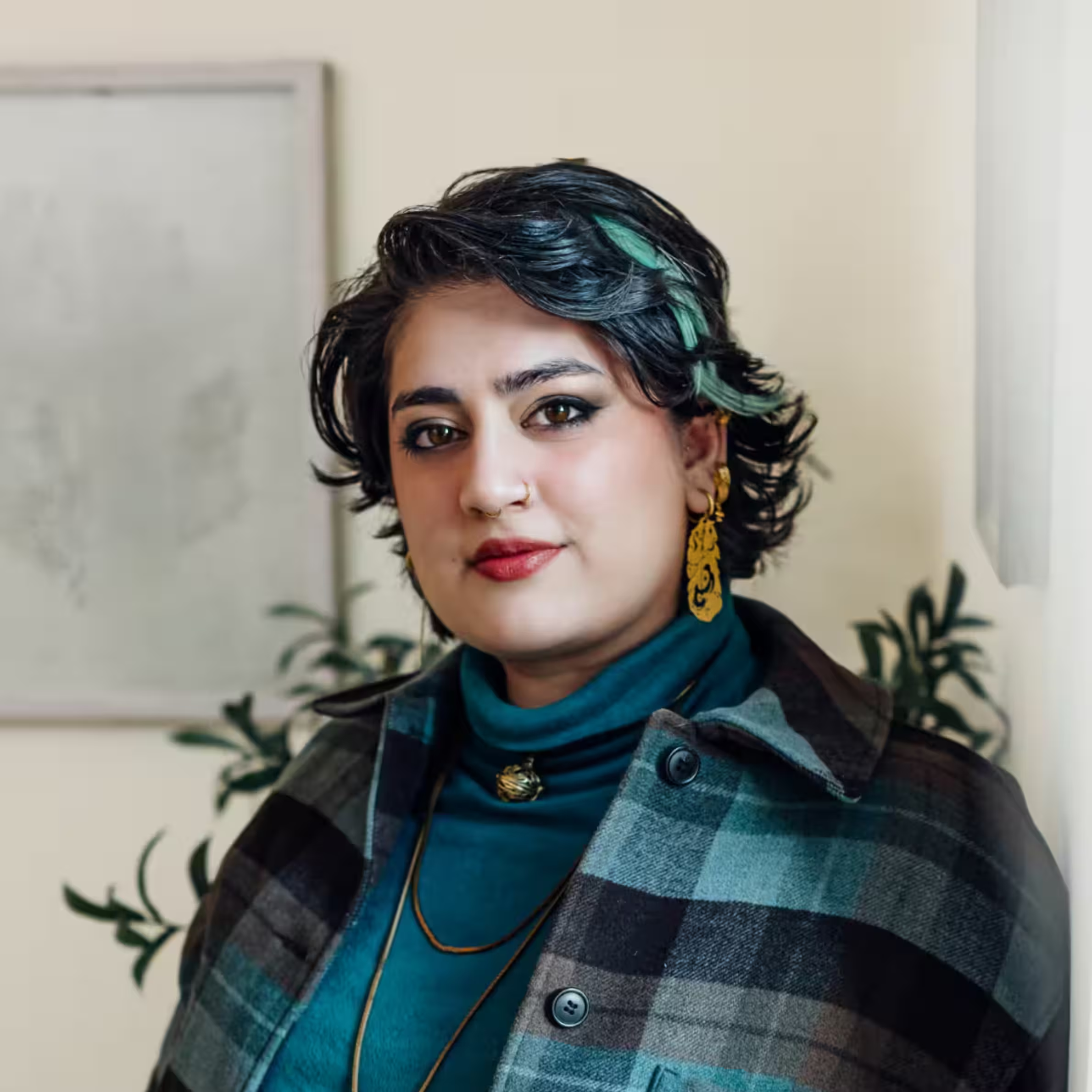
Your identity shapes your experience of the world, and your therapy should understand that.
why you might be here
There's something uniquely exhausting about walking into a space and wondering whether the person across from you will truly get it. Whether they understand what it means to move through the world in your body, with your history, shaped by your culture, your faith, your sexuality, your community, or the ways you've been treated because of who you are. You may have tried therapy before and left feeling like something was missing, like the framework didn't quite fit, or like you spent more time educating your therapist than healing.
Or maybe you're coming to therapy for the first time, and the idea of opening up feels risky. Perhaps the mental health system hasn't always felt like a place that was built with you in mind. Whatever brings you here, you deserve a therapeutic space that doesn't ask you to shrink, translate, or simplify who you are in order to receive support.
how therapy helps
At Providence, our therapists are committed to ongoing learning about the diverse identities, cultures, and lived experiences our clients bring into the room. Diversity-responsive counselling isn't a separate specialty so much as a foundational lens through which we approach every relationship we build with a client. That means we actively reflect on our own biases, stay curious rather than assumptive, and recognize that systems of power, oppression, and privilege are not separate from mental health. They are part of it.
We draw on culturally attuned and trauma-informed approaches that make room for the full complexity of your story. Whether your experience includes racial trauma, navigating immigration and belonging, the intersection of faith and identity, LGBTQ+ experiences, disability, or the compounding weight of holding multiple marginalized identities at once, we work to understand your world rather than fit you into a model that was never designed with you in mind. You shouldn't have to earn the right to be understood here.

years in business
clients served
modalitie options
neurotherapy options

If you have any questions for us prior to booking an appointment or being matched with a therapist, please fill out this contact form and our clinic concierge will get back to you during business hours (Monday- Friday 9:00am to 5:00pm PST).
We look forward to supporting you
604-332-5279
info@providencetherapybc.com

A therapeutic relationship grounded in genuine cultural humility and respect
Language and insight for the ways systemic stress has shaped your mental health
Relief from the exhaustion of navigating spaces that don't acknowledge your experience
A stronger and more compassionate relationship with your own identity
Tools for processing racial, cultural, or identity-based trauma
Greater clarity around values, belonging, and what home feels like in your own skin
The capacity to set boundaries that protect your sense of self in difficult environments
Reduced shame and increased pride in the complexity of who you are
A sense of being known, not just helped
No. Diversity-responsive counselling is relevant to anyone whose identity has shaped their experience of the world, which is all of us. That said, this lens is especially meaningful for people whose identities have been marginalized, misrepresented, or excluded from traditional mental health frameworks. We welcome clients of all backgrounds and are committed to meeting each person where they are.
That's a real and valid concern, and unfortunately, a common one. We take those experiences seriously and don't expect trust to be automatic. Our therapists work to earn it through consistent attunement, curiosity, and accountability. If something in our approach misses the mark, we welcome that feedback. The goal is a relationship that actually fits.
Not necessarily, and we won't pretend otherwise. What we can offer is a team committed to ongoing learning, self-reflection, and awareness of their own positionality. Cultural competence isn't a box you check once. It's a practice, and our clinicians take it seriously. During your discovery call, we can help match you with a therapist who feels like the best fit given what matters most to you.
Yes. Experiences of racism, discrimination, and systemic harm are recognized as genuinely traumatic, and they require trauma-informed care that doesn't minimize their impact. At Providence, we understand that healing from racial or identity-based trauma isn't just about individual coping. It includes validation, grief, anger, and often a reclaiming of identity and dignity. Our trauma-focused approach is well-suited to this kind of deep, layered work.
We welcome that. Spirituality and faith can be a profound source of meaning, community, and resilience, and they can also be complicated, especially when faith communities or religious frameworks have caused harm. Your therapist will follow your lead on how faith fits into your story and will never minimize or pathologize beliefs that are meaningful to you.
There's meaningful overlap. Diversity-responsive counselling draws on multicultural frameworks, anti-oppressive principles, and intersectionality theory, among others. In practice, it means your therapist is actively working to understand the social and structural contexts that shape your experience, not just focusing on individual symptoms or patterns. The goal is therapy that sees you as a whole person within a whole world.

for your clarity
for your clarity
No. Diversity-responsive counselling is relevant to anyone whose identity has shaped their experience of the world, which is all of us. That said, this lens is especially meaningful for people whose identities have been marginalized, misrepresented, or excluded from traditional mental health frameworks. We welcome clients of all backgrounds and are committed to meeting each person where they are.
That's a real and valid concern, and unfortunately, a common one. We take those experiences seriously and don't expect trust to be automatic. Our therapists work to earn it through consistent attunement, curiosity, and accountability. If something in our approach misses the mark, we welcome that feedback. The goal is a relationship that actually fits.
Not necessarily, and we won't pretend otherwise. What we can offer is a team committed to ongoing learning, self-reflection, and awareness of their own positionality. Cultural competence isn't a box you check once. It's a practice, and our clinicians take it seriously. During your discovery call, we can help match you with a therapist who feels like the best fit given what matters most to you.
Yes. Experiences of racism, discrimination, and systemic harm are recognized as genuinely traumatic, and they require trauma-informed care that doesn't minimize their impact. At Providence, we understand that healing from racial or identity-based trauma isn't just about individual coping. It includes validation, grief, anger, and often a reclaiming of identity and dignity. Our trauma-focused approach is well-suited to this kind of deep, layered work.
We welcome that. Spirituality and faith can be a profound source of meaning, community, and resilience, and they can also be complicated, especially when faith communities or religious frameworks have caused harm. Your therapist will follow your lead on how faith fits into your story and will never minimize or pathologize beliefs that are meaningful to you.
There's meaningful overlap. Diversity-responsive counselling draws on multicultural frameworks, anti-oppressive principles, and intersectionality theory, among others. In practice, it means your therapist is actively working to understand the social and structural contexts that shape your experience, not just focusing on individual symptoms or patterns. The goal is therapy that sees you as a whole person within a whole world.